



The school year in Spain is starting again: everything about schools on the Costa Blanca and Costa Cálida
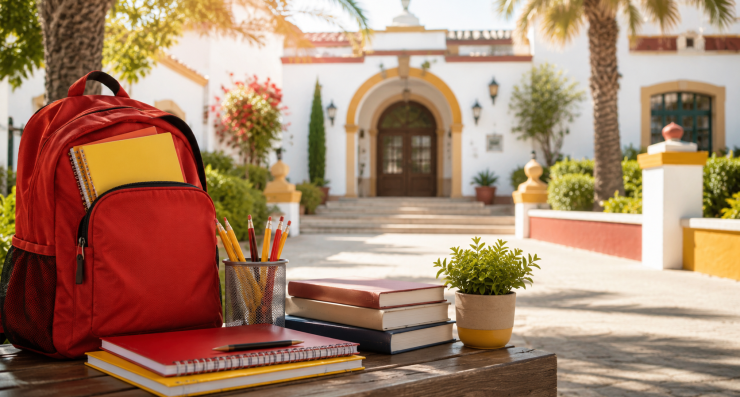
When does the 2026-2027 school year start in Spain?
The Spanish school year runs roughly from September to June. However, the exact dates are determined by the autonomous region. The Costa Blanca falls under the Comunitat Valenciana, while the rules of the Región de Murcia apply to the Costa Cálida.
Costa Blanca – Valencian Community
For Infantil, Primaria, ESO, Bachillerato, and Formación Profesional, the school year begins on September 9, 2026, and ends on June 18, 2027.
Adult education begins on September 14, 2026, and official language education on September 28.
The Christmas holidays run from 22 December 2026 to 6 January 2027. The Easter holidays are set from 25 March to 5 April 2027. In addition, there are regional and local public holidays and days off.
Costa Cálida – Region of Murcia
In Murcia, Infantil, Primaria, and Educación Especial begin on September 8, 2026, and the school year ends on June 22, 2027.
ESO, Bachillerato, FP Grado Básico, and adult education start on September 10, 2026. FP Grado Medio and Superior begins on September 14.
The Christmas holidays run from 24 December 2026 to 6 January 2027, with 23 December also being an official non-class day. Semana Santa runs from 22 to 29 March 2027.
Private and international schools often use their own calendars. Therefore, always check directly with the school when the school year and holidays begin.
How does the Spanish education system work?
Educación Infantil – 0 to 6 years
Not compulsory. The second cycle, from age 3 to 6, is widely available and publicly funded.
Educación Primaria – 6 to 12 years
Compulsory primary education of six school years.
ESO – 12 to 16 years
Four years of compulsory secondary education.
Bachillerato – 16 to 18 years
Not compulsory and primarily intended as preparation for higher education.
Professional Training (FP)
Vocational education that can be followed at different levels.
For children enrolling from the Netherlands or Belgium, factors such as age, previous school career, and educational level are taken into account.
Public, concertado, private, or international?
Public schools
A colegio público is funded by the government. The education itself is free. Admission follows the rules of the autonomous region and depends on, among other things, available places.
Concertado schools
These are private schools where certain educational phases are funded by public funds. A regulated admissions process applies to publicly funded places. Meals, transport, childcare, and activities may be charged separately.
Private schools
Fully private schools largely determine their own admission requirements, fees, and school calendar. At these schools, always ask about the total annual costs, and not just the monthly tuition.
International schools
There is a wide range of international schools on both the Costa Blanca and Costa Cálida. Depending on the school, they may work with a British curriculum, the International Baccalaureate (IB), a European programme, or a combination with the Spanish education system. Research in advance which diplomas your child will obtain and how a potential transfer to another education system works.
In what language is your child taught?
On the Costa Blanca, both Spanish (Castilian) and Valencian play a role. The exact distribution may vary by school, grade, and subject. In the Región de Murcia, Spanish is generally the main language. In addition, various schools offer bilingual programs, often including English.
International schools generally use English as the language of instruction, supplemented by Spanish and sometimes a third language.
What if your child doesn't speak Spanish yet?
Due to the international character of the Costa Blanca and Costa Cálida, many schools are accustomed to children transferring from other countries. Some international and bilingual schools offer extra Spanish lessons or specific language support. This can take place in the classroom, individually, or in small groups.
- Which language is used for each subject?
- What support does a child who does not yet speak Spanish receive?
- How many hours of language support are offered?
- Is this guidance included in the tuition fees?
- How is progress monitored?
Can you choose your own school in Spain?
At public and Concertado schools, parents can indicate preferred schools. However, a place at the school of first choice is not guaranteed. If there are more applications than available places, regional admission criteria apply.
An important concept in this context is the padrón or empadronamiento: the municipal registration at your residential address. The residential address can influence the school zone or the number of points an application receives. Other factors can also play a role, such as siblings already attending the school, a parent's work address, and certain family circumstances.
For private and international schools, you apply directly to the school. The school then determines the admission requirements and availability itself.
Palmhouses Tip
When searching for a home, do not just look at the distance to a school on Google Maps. Also check the school zone, school bus options, and especially the actual travel time during the morning rush hour. A home that appears close on paper can result in a very different travel time in daily practice.
When should you register your child?
Official enrollment periods exist for public and concertado schools. For the 2026-2027 school year, the regular application periods in the Comunitat Valenciana and Murcia already took place in the spring of 2026.
Are you moving to Spain later? Fortunately, that does not mean your child can no longer attend school. There are procedures for late enrollment and school placement during the school year. In Murcia, for example, there is a permanent admissions phase for this.
If you move outside the regular enrollment period, contact the regional education service or your preferred school as soon as possible.
Which documents do you need for registration?
The exact documents vary by region, school type, and personal situation. It is advisable to prepare at least the following documents:
- Valid passport or identity card of child and parents
- Birth certificate or libro de familia
- NIE/TIE if already available
- Proof of empadronamiento
- Recent school reports and grade lists
- Information about the last academic year completed
- Any deregistration or transfer certificate from the previous school
- Any medical or educational reports
- Documents regarding guardianship or parental authority, where applicable
In addition, private and international schools may require, for example, an intake interview, a school reference, a language or level test, and an enrollment deposit.
Practical tip: keep important documents as the original, digital PDF, and paper copy. Ask in advance whether documents need to be translated and whether a sworn translation or apostille is required.
What if you move to Spain in the middle of the school year?
Even then, your child can enroll. However, the available school is not always the school of first choice. Good preparation helps prevent delays.
Register the family with the municipality as soon as possible upon arrival, research which accredited schools are located in the area, and contact the regional admissions office or the desired school. Clearly indicate that this involves late enrollment due to a move to Spain.
As soon as a school has been assigned, also ask about practical matters such as books, uniform, lunch, transport, language support, and the first day of school.
International schools on the Costa Blanca
- Lady Elizabeth School
- Xàbia International College
- AIS International School
- Elian's British School of La Nucía
- Sierra Bernia School
- Lope de Vega International School
- King's College School Alicante
- Newton College
- European School of Alicante
- ELIS Villamartín
- Phoenix International School
- Willow International School
- Skandinaviska Skolan Costa Blanca
- The Norske Skolen i Rojales
The educational offerings range from British and Scandinavian curricula to Spanish, European, and international educational programs.
International schools on the Costa Cálida
- King's College School Murcia
- El Limonar International School Murcia
- New Castelar College
- Colegio Miralmonte
- Colegio Narval
- Colegio Montepinar
Which school suits your family best depends not only on the location. Also consider the curriculum, language of instruction, your child's age, further education options, available places, and, of course, the costs.
The schools listed constitute a practical selection and are not a ranking or recommendation. Please check current admissions, fees, calendar, and available places directly with each school.
How much does school cost in Spain?
In public education, the education itself is publicly funded. However, that does not mean that a school year is entirely free.
- Books and digital teaching materials
- School meals
- School transport
- Morning and after-school care
- Sports clothing or uniform
- School activities and excursions
At private and international schools, tuition fees are added to this. Depending on the school and the grade level, rates vary widely. In the original overview for 2026-2027, published rates range from a few thousand euros per year to over €15,000 per year at certain international schools. Additionally, registration fees, lunch, bus transport, uniforms, exams, and other services may be charged separately.
Therefore, always ask for an all-in annual calculation before comparing schools.
What do you ask during a school visit?
- Is there a place in the right grade?
- How is the entry level determined?
- What language support does my child receive?
- What is the language of instruction?
- Which diplomas are ultimately obtained?
- What are the total annual costs?
- Is there school transport from our potential place of residence?
- How does the school communicate with parents?
- How are additional educational or support needs addressed?
This way, you get a picture not only of the education, but also of how the school fits into your future daily life.
Include the school in your search for a home
When you move to Spain with children, the home is not the only factor determining how pleasant your new life will be. The distance to school, travel time, accessibility, school buses, and daily amenities are at least as important.
A beautiful villa with a pool can be perfect on paper, but become less practical when you spend a long time commuting to school every morning and afternoon.
Therefore, make a list of your most important requirements before the house viewings:
- Desired type of school
- Language of instruction
- Maximum travel time
- School bus options
- Sports and leisure facilities
- Distance to shops and daily amenities
This way, you are not only looking for a beautiful house in Spain, but for a living environment that suits the whole family.
Palmhouses Tip
If possible, schedule a school visit and home viewings during a viewing trip. Also, drive from the potential neighborhood to school on a normal school morning. This will give you a much more realistic picture of your future daily routine.
Frequently asked questions about school in Spain
Can I choose my own school in Spain?
For public and Concertado schools, you can indicate your preferences. In the event of oversubscription, admission criteria apply, and another school may ultimately be assigned. For private and international schools, you apply directly.
Is public school in Spain free?
The education itself is publicly funded. However, there may be costs for things like books, meals, transport, childcare, and activities.
Are there international schools on the Costa Blanca and Costa Cálida?
Yes. Both regions have various British, international, Spanish bilingual, and other private education options.
Can my child start in the middle of the school year?
Yes. The education authority or school then reviews the available places and suitable intake options.
Do I need to have a home already before I can arrange a school?
For public and concertado schools, the home address can be important, and the empadronamiento often plays a role. For private schools, you can usually inquire about availability and admission earlier.
Will my child receive extra Spanish lessons if they do not speak the language yet?
Many international and bilingual schools offer language support, but the form and extent vary by school. Therefore, inquire about this in advance.
Does an international school follow the same holidays?
Not necessary. Private and international schools can use their own school calendar.
Moving to Spain with children? Good preparation provides peace of mind.
Moving to Spain with children requires more than just finding a suitable home. By researching schools, the language of instruction, admission requirements, and the daily distance between home and school beforehand, you can avoid surprises after the purchase agreement has already been signed.
When home, school, and living environment are well aligned, the step towards a new life in Spain becomes much more manageable.
Are you still looking for a property on the Costa Blanca or Costa Cálida?
Palmhouses is happy to help you find a home and living environment that match your family's wishes.
View our current properties or contact Palmhouses for a personal consultation.
Palmhouses Real Estate
hola@palmhouses.eu
+34 604 431 219
www.palmhouses.eu
 Back
Back


